
For decades, utilities around the world have relied on composite crossarms to improve reliability, reduce maintenance, and strengthen overhead distribution networks. Wagners CFT manufactures advanced Fiber Reinforced Polymer (FRP) crossarms engineered to deliver consistent structural and electrical performance in demanding utility environments. Manufactured using our proprietary pull-winding process, Wagners CFT composite crossarms provide a durable alternative to traditional wood crossarms while helping utilities reduce lifecycle costs and improve network resilience. Resistant to moisture, corrosion, rot, insect attack, and environmental degradation, composite crossarms are increasingly being specified for new construction, replacement programs, and grid modernization initiatives across North America.
Why Utilities Are Switching to Composite Crossarms
Traditional wood crossarms have served utility networks for decades, but they remain susceptible to moisture ingress, decay, biological attack, and ongoing maintenance requirements.
Composite crossarms offer utilities a modern alternative engineered for long-term performance and reliability.
Manufactured from advanced Fiber Reinforced Polymer (FRP), composite crossarms deliver consistent mechanical and electrical properties throughout their service life, helping utilities reduce inspection requirements, improve reliability, and lower long-term maintenance costs.
Key Benefits
Resistant to Rot and Biological Attack
Unlike timber crossarms, composite crossarms are not susceptible to rot, termites, fungal decay, or wood-boring insects. This helps utilities improve asset longevity while reducing maintenance requirements
Corrosion Resistant
Composite crossarms perform exceptionally well in coastal, high-humidity, and corrosive environments where traditional materials can deteriorate over time
Lightweight and Easy to Install
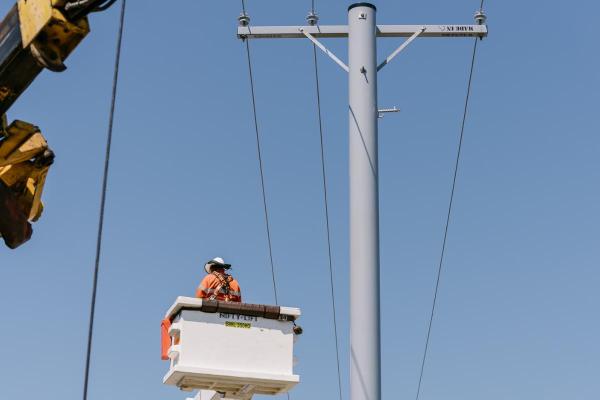
The lightweight nature of FRP simplifies transportation, handling, and installation while helping crews work more efficiently in the field
Non-Conductive
Composite crossarms provide excellent electrical insulation properties and are widely used throughout overhead distribution networks
Long Service Life
Engineered for decades of service, composite crossarms help utilities reduce replacement frequency and improve long-term asset performance
Consistent Manufacturing Quality
Unlike natural timber products, composite crossarms deliver repeatable material properties and predictable performance from one crossarm to the next
Built for Challenging Utility Environments
North American utilities operate in some of the most demanding environmental conditions in the world.
From Gulf Coast humidity and coastal salt exposure to extreme heat, severe storms, ice loading, and wildfire-prone regions, utility infrastructure must perform reliably year after year.
Composite crossarms are engineered to withstand these challenging conditions while maintaining their structural and electrical performance throughout their service life.
Applications include:
- Overhead distribution installations
- New and replacement transmission installations
- Sub-transmission applications
- Utility pole replacements
- New network construction
- Grid hardening programs
- Coastal utility infrastructure
- Storm restoration projects
- Rural electrification
- Municipal utility systems
- Cooperative utility networks
- Tangent crossarm configurations
- Dead-end assemblies, where specified by the utility
A Proven Utility Solution
Composite crossarms are no longer an emerging technology.
Utilities have successfully deployed FRP crossarms for decades to improve reliability, reduce maintenance requirements, and strengthen network performance.
Today, composite crossarms are widely recognized as a proven utility asset that can help address many of the challenges associated with traditional wood crossarms while supporting long-term asset management objectives.
Designed for Utility Crews
Utility infrastructure must not only perform in service but also be practical to install and maintain.
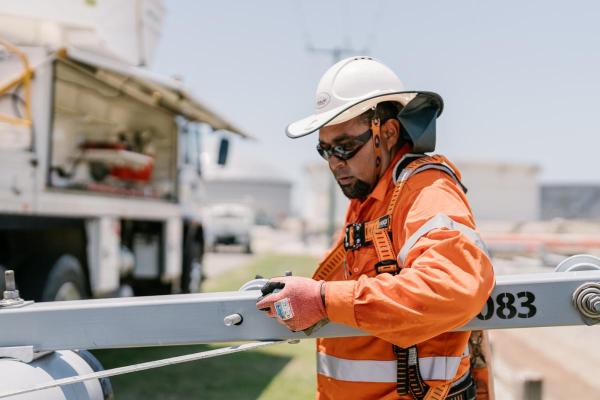
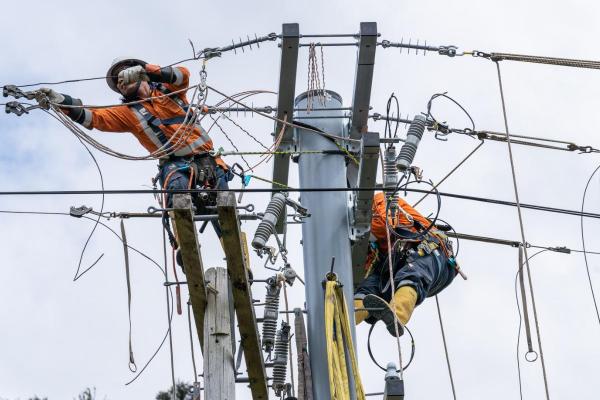
Wagners CFT composite crossarms are lightweight, easy to handle, and can be field drilled using standard tools and work practices. This helps simplify installation and allows utilities to integrate composite crossarms into existing construction and maintenance programs.
Why Wagners CFT?
Wagners CFT combines advanced composite manufacturing technology with decades of infrastructure experience.
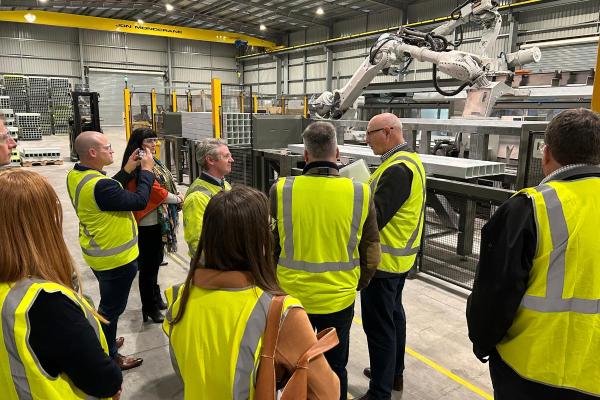
Our composite crossarms are manufactured in Texas and supported by an experienced engineering team that works directly with utilities, consultants, contractors, and asset owners throughout North America.
Using our proprietary pull-winding process, we manufacture high-performance composite products designed to deliver long-term durability, dependable performance, and reduced maintenance requirements for modern utility networks.
- Manufactured in Texas
- Engineered for North American Utilities
- Built for Long-Term Reliability
Composite Crossarms FAQ’s
What are FRP crossarms?
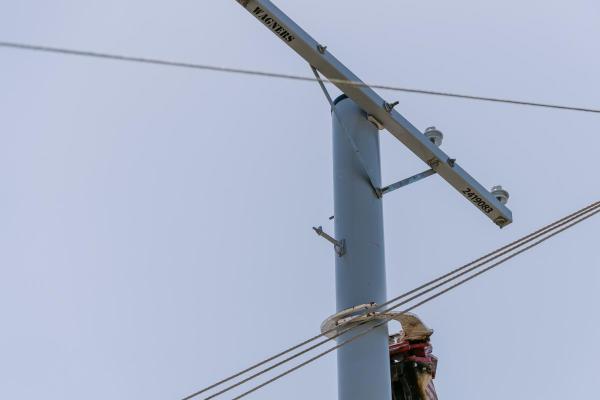
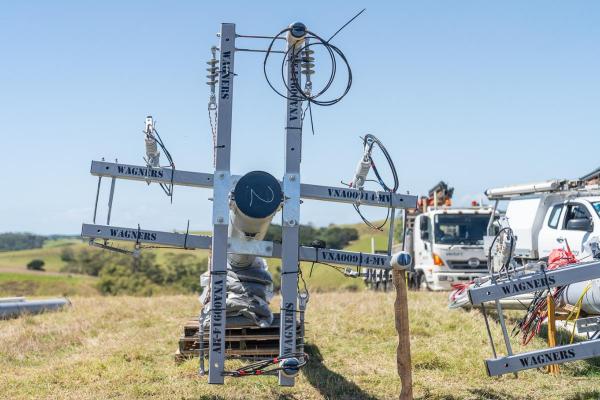
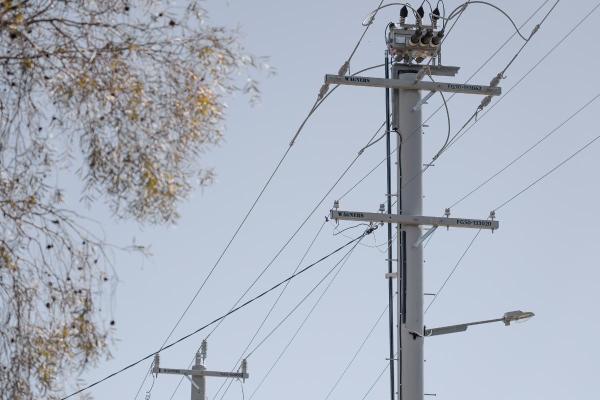
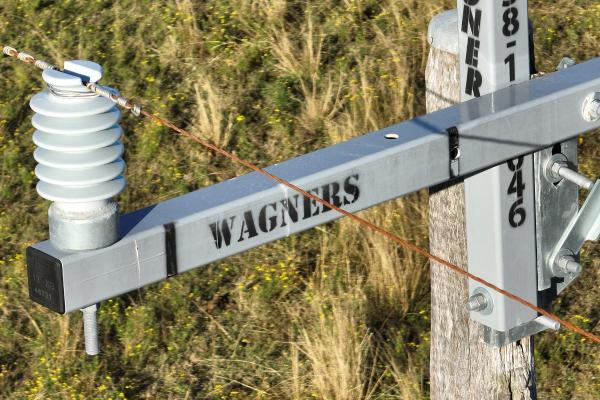
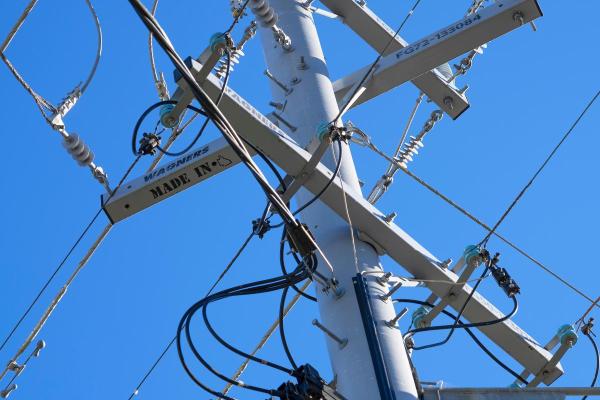
FRP crossarms are structural electrical crossarms manufactured from fiber reinforced polymer (FRP) composite materials. Installed on utility poles, they support conductors, power lines and associated hardware across overhead distribution networks. Wagners CFT composite crossarms are designed to provide consistent structural and electrical performance while offering a durable alternative to traditional wood crossarms in new construction, replacement and grid hardening applications.
Are composite crossarms the same as fiberglass crossarms?
In many utility contexts, the term fiberglass crossarm is used to describe FRP or fiber reinforced polymer crossarms. Wagners CFT composite crossarms are manufactured using engineered composite materials, including electrical grade glass fiber reinforcement and resin systems designed for utility infrastructure applications. While “fiberglass” is a common market term, FRP is the more accurate technical description for these composite crossarms.
Why are utilities replacing wood crossarms with composite crossarms?
Utilities are replacing wood crossarms with composite crossarms to reduce common risks associated with traditional materials, including rot, moisture ingress, termites, wood-boring insects, woodpeckers and corrosion around connected hardware. Because composite crossarms are engineered rather than cut from natural timber, there are a number of inherent advantages. They provide more consistent material properties from one crossarm to the next. This helps utilities improve grid reliability, reduce maintenance requirements and support longer-term network planning.
How long are Wagners composite crossarms designed to last?
Wagners’ technical guide notes a typical design life of 40 years for most locations and environments. Actual design life may change depending on durability parameters specific to the installed location and should be confirmed before final design. Wagners composite crossarms are designed for low-maintenance service, with resistance to corrosion, physical attack, dimensional instability and fire damage among the durability factors considered in the technical guide.
Are FRP crossarms resistant to termites and insect attack?
Yes. FRP crossarms are not susceptible to termites, wood-boring insects, fungal decay, or other forms of biological attack that commonly affect timber crossarms. This makes them particularly attractive in regions where insect damage is a concern.
Are composite crossarms suitable for harsh climates?
Yes. Composite crossarms are well suited to demanding climates where wood crossarms and other traditional materials can be affected by salt air, humidity, acid rain, desert heat, moisture, insects and airborne contaminants. Wagners CFT crossarms are manufactured with a co-extruded coating tested against electrical tracking and UV protection. The technical guide also references environmental testing for UV resistance, chemical attack, moisture ingress, fire damage and extreme temperature performance.
Are FRP composite crossarms non-conductive?
Yes. FRP crossarms are naturally non-conductive and offer excellent electrical insulation properties. This characteristic contributes to their widespread use in overhead distribution networks and utility infrastructure applications.
Can composite crossarms be drilled or cut on-site?
Yes, Wagners CFT composite crossarms can be drilled or cut on-site where required, provided the correct process is followed. Wagners’ technical guide notes that on-site drilling requires anti-crush inserts at hole locations, with design checks completed by Wagners to confirm whether the additional hole is acceptable. Freshly drilled holes and on-site cuts must also be properly sealed using approved resin.
What should utilities consider when specifying composite crossarms?
We encourage utilities to specify composite crossarms based on project requirements, pole configuration, loading, hardware, installation method, environmental exposure and applicable utility standards. For US projects, this may include assessment against relevant requirements under the National Electric Safety Code (NESC), where applicable. Wagners CFT provides technical information to support utility review, including profile sizing, material details, mechanical testing, electrical testing, environmental testing and in-field workability guidance. The technical guide includes ASTM, ISO, IEC and other test references, so engineering teams can review the data before final selection.
Are FRP crossarms a cost-effective solution for utilities?
While the initial purchase price may differ from traditional materials, FRP crossarms can deliver significant lifecycle cost savings through reduced maintenance, fewer replacements, improved durability, and longer service life. Many utilities evaluate FRP crossarms based on total cost of ownership rather than upfront cost alone.
Have a project in mind?
Book a project deep dive with us and work through your projects plans and problems with the experts!

