
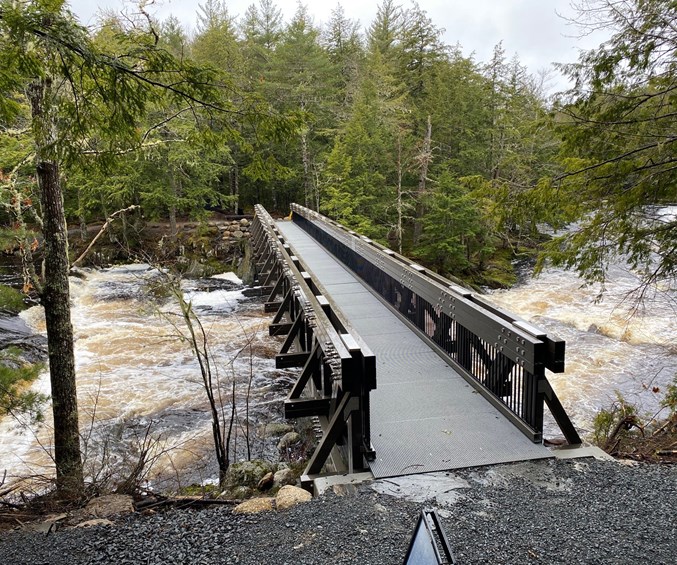
Pedestrian bridges play a critical role in connecting communities, improving accessibility, and creating safe crossings over waterways, roadways, rail corridors, wetlands, and other natural or man-made obstacles. Wagners CFT is an experienced pedestrian bridge manufacturer, designing advanced Fiber Reinforced Polymer (FRP) bridge systems that provide a durable, low-maintenance alternative to traditional bridge materials such as timber, steel and concrete. Engineered for long-term performance, our composite pedestrian bridges help owners reduce maintenance requirements while delivering safe and reliable access for decades. From trail networks and parks to transportation corridors, waterfront developments, and public pedestrian infrastructure projects, Wagners CFT pedestrian bridges are built to perform in some of North America’s most demanding environments.
Durable FRP Pedestrian Bridges for Parks, Trails, and Public Infrastructure
Why Choose a Composite Pedestrian Bridge?
Pedestrian bridges are often located in environments where moisture, corrosion, flooding, ultraviolet exposure, and biological attack can significantly impact traditional materials.
Composite pedestrian bridges are engineered to overcome these challenges, delivering exceptional durability, reduced maintenance requirements, and long service life.
Corrosion Resistant
Unlike steel, composite pedestrian bridges won’t rust or corrode. Bridge decking, railings, and structural connections stay sound even when crossing tidal zones, wetlands, or salt-affected coastal trails, conditions that steel bridge hardware often can’t withstand long-term.
Resistant to Rot and Biological Attack
Unlike timber decking and structural members, FRP won’t rot, split, or attract termites, helping trail and park bridges avoid the deck replacements that typically shorten the life of timber crossings.
Lightweight Construction
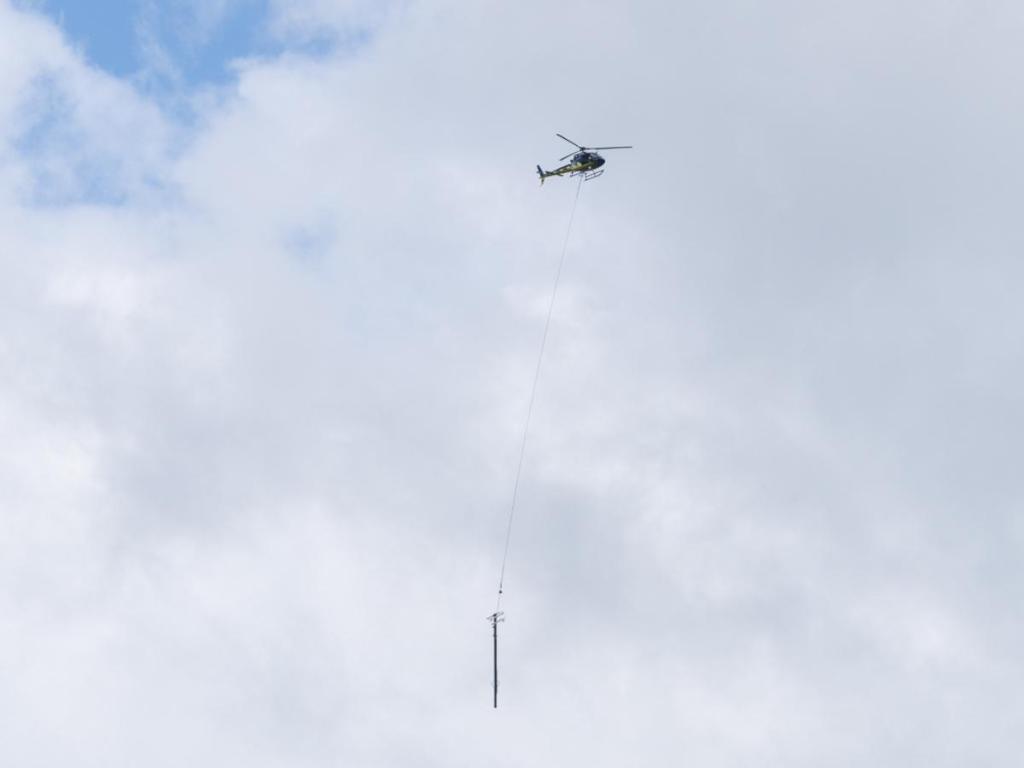
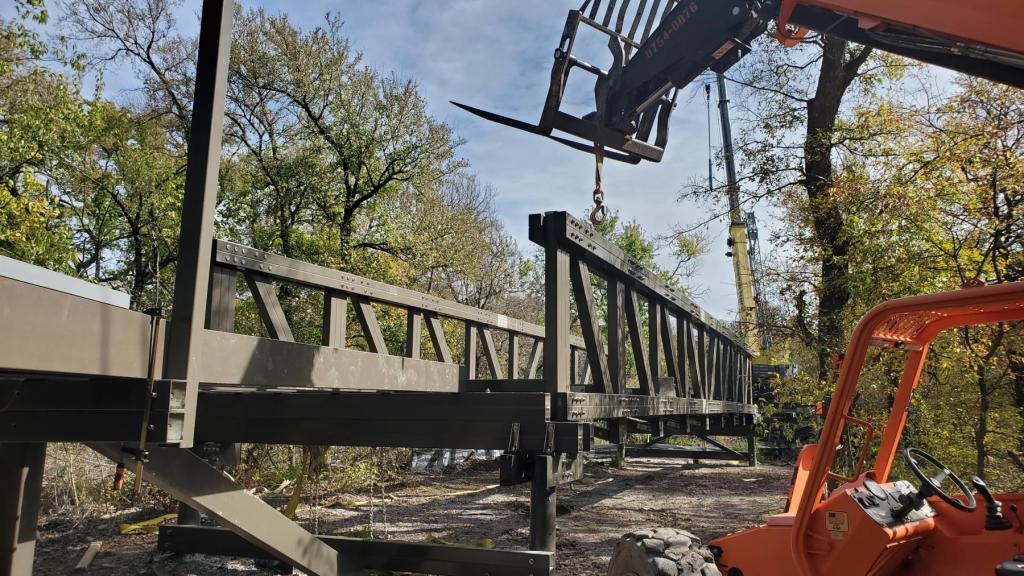
FRP bridge spans and decking can often be installed without heavy cranes, reducing disruption to the wetlands, waterways, and trail corridors bridges typically cross. This is a real advantage on remote or environmentally sensitive sites.
Low Maintenance
Composite bridge systems require significantly less maintenance than many traditional materials helping reduce lifecycle costs and long-term asset management requirements.
Long Service Life
Engineered for decades of safe pedestrian and cyclist crossings, FRP pedestrian bridges reduce how often municipalities need to close, repair, or fully replace a public bridge asset.
Ideal for Challenging Environments
Many pedestrian bridge projects are located in areas where access is limited or environmental considerations are critical. Composite pedestrian bridges are particularly well suited to:
Wetlands and Conservation Areas
Lightweight components help reduce site disturbance while providing long-term durability in wet and environmentally sensitive conditions.
Coastal and Waterfront Locations
FRP’s corrosion resistance makes it ideal for marine and coastal applications where steel structures can deteriorate rapidly.
Remote Access Projects
The lightweight nature of FRP can simplify transportation and installation in difficult-to-access locations.
High-Use Public Spaces
Composite bridges are engineered to provide dependable performance in parks, recreational facilities, and public access infrastructure with heavy pedestrian traffic.
Engineered for Public Infrastructure
Every bridge project is unique. Wagners CFT works closely with municipalities, engineers, transportation agencies, parks departments, trail authorities, contractors, and developers to deliver pedestrian bridge solutions tailored to the specific requirements of each site. Our pedestrian bridges are designed to AASHTO standards and our in-house engineering team can assist with bridge design, load requirements, accessibility considerations, constructability, and project-specific performance criteria.
Applications for FRP pedestrian bridges include:
- Parks and recreation areas
- Multi-use trail networks
- Greenway systems
- Nature reserves
- Transportation corridors
- Campus infrastructure
- Waterfront developments
- Tourism destinations
- Wetland crossings
- Municipal infrastructure projects
Design Flexibility
Wagners CFT pedestrian bridges can be tailored to suit a wide range of project requirements. Available options include:
- Custom span lengths
- Multiple bridge widths
- FRP decking systems
- FRP micromesh walking surfaces
- Architectural railing systems
- ADA-compliant configurations
- Custom colors and finishes
- Project-specific engineering solutions
Whether supporting a signature public infrastructure project or a practical trail crossing, our team can develop a solution that meets both performance and aesthetic objectives.
A Sustainable Alternative to Traditional Materials
Asset owners are increasingly seeking infrastructure solutions that provide long-term environmental and economic value. The durability and low maintenance requirements of FRP pedestrian bridges help reduce replacement frequency, minimize maintenance interventions, and extend asset life. This contributes to lower lifecycle costs and more sustainable infrastructure outcomes over time. For municipalities and infrastructure owners focused on long-term asset performance, composite pedestrian bridges provide a practical alternative to traditional construction materials.
FRP Composite Pedestrian Bridges
Our composite pedestrian bridges and other structures can be supplied to the construction site as fully or partially pre-assembled, in kit form, or for full on-site assembly. Your project may include multiple components from stairs, platforms, ramps, decking (or grating) to boardwalks.
Why Wagners CFT?
A pedestrian bridge is often the most visible, longest-lived piece of infrastructure in a park or trail system — it needs to look right for decades, not just perform structurally.
Wagners CFT’s in-house engineering team works closely with owners, consultants, architects, landscape architects, and contractors to balance durability, constructability, aesthetics, and long-term performance in every bridge design. Manufactured in the United States, our pedestrian bridges are helping communities create resilient, attractive public infrastructure across North America.
- Manufactured in the United States
- Engineered for Long-Term Performance
- Built for Parks, Trails, and Public Infrastructure
COMPOSITE FRP PEDESTRIAN BRIDGES – FAQS
What are FRP pedestrian bridges?
FRP pedestrian bridges are bridge structures made using Fiber Reinforced Polymer materials. These composite materials are engineered to provide strong, durable and corrosion resistant pedestrian access infrastructure without the rot, rust or high maintenance requirements often associated with traditional timber, steel and concrete bridge structures. FRP pedestrian bridges can be used across parks, trails, wetlands, waterfront developments, transportation corridors, campuses and other public infrastructure projects where long-term durability, low maintenance and reliable access are important.
Where are pedestrian bridges most useful?
Pedestrian bridges are often used where people need a safer, more convenient way to cross water, busy roads, railways, highways, intersections, wetlands or uneven landscapes. They can connect parks, trails, streets, campuses, parking garages, public spaces and community destinations while keeping pedestrians and cyclists separated from traffic or difficult terrain.
What makes a pedestrian bridge work well in public infrastructure?
A well designed pedestrian bridge should suit the site conditions, span length, foot traffic, accessibility needs and surrounding environment. Depending on the project, this may include ramps, stairs, abutments, lighting, landscape integration, ADA guidelines, aesthetic appeal and access for maintenance vehicles. FRP, steel pedestrian bridges, truss bridges and other structures may all be considered during bridge design.
How do FRP pedestrian bridges compare with concrete, timber and steel pedestrian bridges?
FRP pedestrian bridges provide a durable alternative to traditional bridge materials. Unlike steel, FRP does not rust or corrode. Unlike timber, it is not susceptible to rot, termites, fungal decay or insect attack. FRP is also lightweight, which can help simplify transportation, handling and installation across challenging bridge sites.
For asset owners, this can support long-term performance, reduced maintenance requirements and more practical asset management across parks, trails, waterfronts, wetlands and other demanding environments.
Are FRP pedestrian bridges suitable for coastal, wet or corrosive environments?
Yes. FRP pedestrian bridges are particularly well suited to coastal, waterfront, wetland and high-moisture environments because FRP does not rust or corrode. This makes it a practical option for bridge projects where moisture, flooding, ultraviolet exposure, marine conditions or biological attack can affect traditional materials. For municipalities, parks departments, trail authorities and infrastructure owners, FRP bridges can provide dependable long-term performance in harsh environments with reduced maintenance requirements.
Can FRP pedestrian bridges be customized for different bridge projects?
Yes. Wagners CFT pedestrian bridges can be tailored to suit a wide range of project requirements, including custom span lengths, multiple bridge widths, FRP decking systems, micromesh walking surfaces, architectural railing systems, ADA-compliant configurations, custom colors and project-specific engineering solutions.
This design flexibility allows each FRP bridge project to respond to the site conditions, accessibility requirements, load requirements, aesthetic objectives and long-term performance needs of the project.
What information is needed for FRP pedestrian bridge design?
FRP pedestrian bridge design typically depends on the bridge span, required width, expected users, load requirements, site conditions, access requirements, foundation design and the surrounding environment. Project teams may also need to consider pedestrian traffic, bicycle access, maintenance access, railing requirements, decking surfaces and accessibility considerations. Wagners CFT works with municipalities, engineers, transportation agencies, parks departments, trail authorities, contractors and developers to help align the bridge structure with the specific requirements of the site.
Can FRP pedestrian bridges support bicycles, golf carts or maintenance vehicles?
FRP pedestrian bridges can be designed for different access requirements depending on the project brief. In addition to pedestrian use, some bridge projects may need to consider cyclists, equestrian users, golf carts, maintenance vehicles or other light vehicle applications. Load requirements should be confirmed early in the bridge design process so the bridge structure, FRP components, decking systems and supporting infrastructure can be developed for the intended use.
Do FRP pedestrian bridges require standard concrete foundations?
Foundation requirements depend on the bridge site, span length, load requirements, soil conditions and project-specific engineering requirements. FRP pedestrian bridges are lightweight compared with many traditional materials, but the foundation design still needs to be suitable for the bridge structure and intended loads. Wagners CFT can work with the project team to coordinate bridge design requirements, including foundation considerations and anchor bolt layout requirements where needed.
Are FRP pedestrian bridges difficult to install?
FRP pedestrian bridges are designed with installation practicality in mind. Because FRP is lightweight, bridge components can be easier to transport, handle and position than many traditional bridge materials, particularly in remote access locations, wetlands, conservation areas and other difficult bridge sites. This can help reduce construction impacts on surrounding environments while supporting efficient installation for parks, trails, public access infrastructure and municipal bridge projects.
What should asset owners look for in a pedestrian bridge manufacturer?
Asset owners should look for a pedestrian bridge manufacturer with proven infrastructure experience, in-house engineering support, durable FRP products, project-specific design capability and an understanding of public infrastructure requirements. For municipalities, engineers, contractors, parks departments, trail authorities and developers, the right manufacturer should be able to support bridge design, load requirements, constructability, aesthetics, long-term performance and site-specific project needs from early planning through to delivery.
Have a project in mind?
Book a project deep dive with us and work through your projects plans and problems with the experts!

